
On this page
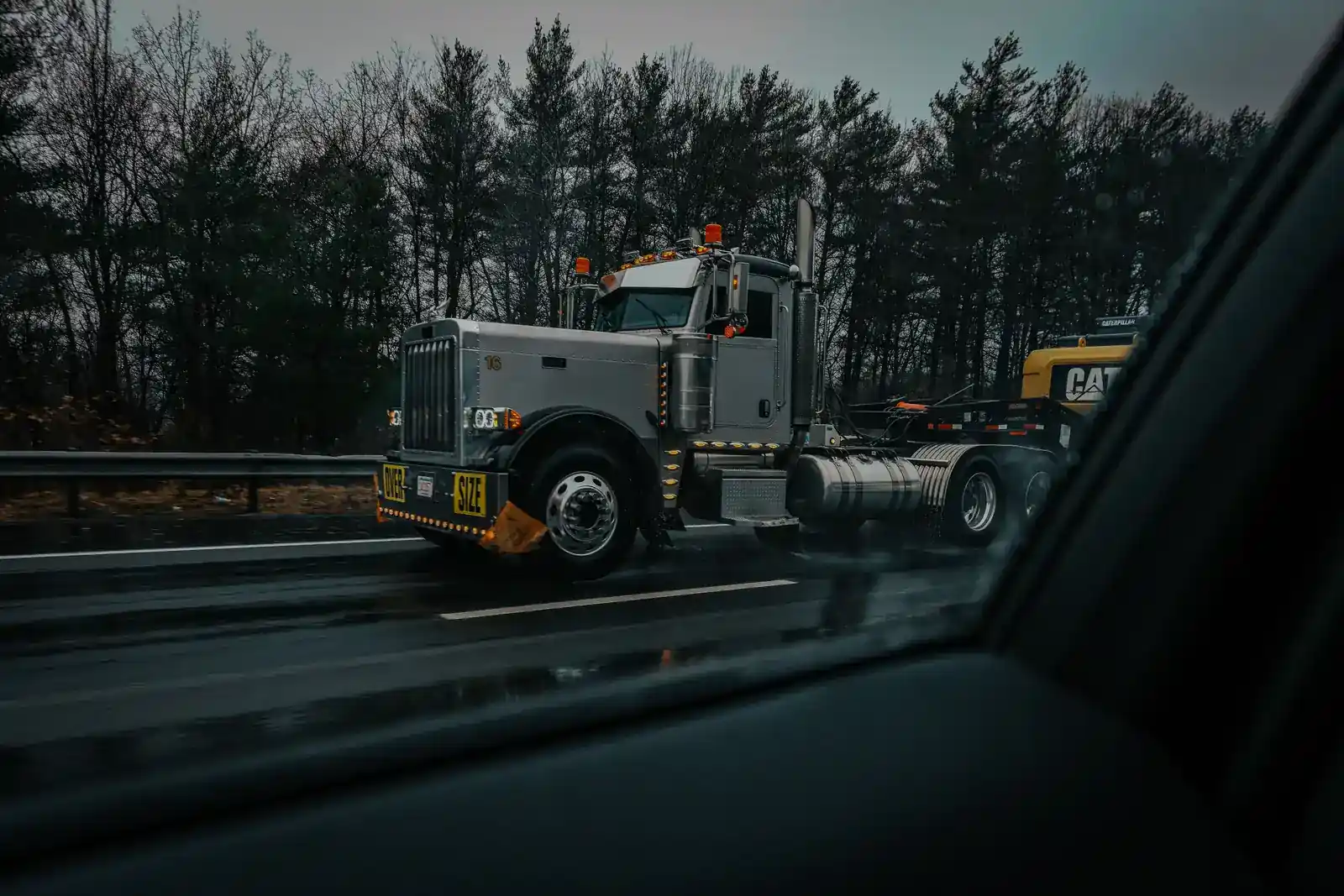
The name “tractor-trailer” describes the vehicle’s two main parts. The tractor is the powered vehicle at the front, where the driver sits and the engine is located. The trailer is the separate portion pulled behind the tractor and is typically used to transport cargo.
Understanding the difference between these parts is useful because a tractor-trailer is not simply one large vehicle. After an accident, the tractor, trailer, cargo, driver, and trucking operation can each raise different questions and lead investigators to different records.
What Is the Tractor?
The tractor is the front, powered portion of the combination.
The Federal Motor Carrier Safety Administration defines a truck tractor as a self-propelled commercial motor vehicle designed and primarily used to draw other vehicles.
The tractor generally contains the:
- Engine
- Driver’s cab
- Steering and controls
- Fuel system
- Front axle and drive axles
Unlike a typical straight truck, the tractor is primarily designed to pull another vehicle rather than carry the main cargo load itself.
What Is the Trailer?
The trailer is the separate vehicle connected behind the tractor. FMCSA defines a trailer as a motor vehicle designed to be drawn by another motor vehicle.
Trailers can be designed for different types of freight. The particular configuration can depend on what is being transported.
The important concept is simple: the tractor provides the power, while the trailer is pulled behind it.
Because the two pieces are detachable, the same tractor may pull different trailers during different trips.
How Is a Tractor-Trailer Different From a Straight Truck?
One of the easiest ways to understand a tractor-trailer is to compare it with a straight truck.
FMCSA describes a straight truck as a commercial motor vehicle in which the power unit and cargo box are non-detachable. A tractor-trailer, by comparison, consists of a truck tractor connected to a detachable trailer.
A box truck, for example, may have the cab, engine, and cargo area built into one vehicle. With a tractor-trailer, the tractor and trailer are separate units connected together.
That difference can become important during an accident investigation because ownership and maintenance responsibilities may involve more than one person or company.
Are Tractor-Trailers Commercial Motor Vehicles?
Many tractor-trailers qualify as commercial motor vehicles under federal regulations, but the legal definition depends on factors such as the vehicle’s weight, use, passengers, cargo, and whether it operates in interstate commerce.
For interstate operations, FMCSA’s definition includes certain vehicles with a gross vehicle weight rating or gross combination weight rating of 10,001 pounds or more, along with vehicles meeting certain passenger or hazardous-material criteria.
Federal commercial trucking regulations can address areas such as driver qualifications, hours of service, inspection and maintenance, and recordkeeping.
However, the rules that apply to a particular truck must be determined from the actual vehicle and operation rather than simply assuming that every tractor-trailer is governed by exactly the same requirements.
Why Does It Matter After an Accident?
Knowing that a vehicle is a tractor-trailer can help identify the types of evidence that may need to be investigated after a collision.
Depending on the circumstances, questions may include:
- Who was driving the tractor?
- Who employed or contracted with the driver?
- Who owned the tractor?
- Who owned the trailer?
- Who inspected or maintained the equipment?
- Who loaded the cargo?
- What trucking or dispatch records exist?
Evidence can potentially include photographs, witness statements, driver records, maintenance and inspection documents, dispatch communications, electronic logging information, cargo records, GPS or telematics data, and electronic vehicle information.
The tractor and trailer may even be owned by different businesses. That does not automatically make either company legally responsible for a collision. Responsibility has to be determined from the facts, applicable law, and evidence.
At Jacqueline A. Scott & Associates, our practice includes truck and tractor-trailer accident cases in Louisiana. Our firm can investigate the vehicle, driver, businesses, records, and other evidence involved rather than assuming what caused a crash simply because a commercial truck was involved.
Frequently Asked Questions
Is a tractor-trailer the same as an 18-wheeler?
The terms are often used interchangeably, but they describe the vehicle in different ways. “Tractor-trailer” emphasizes the tractor and detachable trailer, while “18-wheeler” commonly refers to a tractor-trailer configuration with 18 wheel positions.
Can the tractor and trailer have different owners?
Yes. Because the tractor and trailer are separate units, ownership does not necessarily have to be the same. The actual ownership and business relationships should be verified in a particular accident investigation.
Is a tractor-trailer different from a straight truck?
Yes. FMCSA describes a straight truck as having a power unit and cargo box that are non-detachable. A tractor-trailer has a truck tractor pulling a detachable trailer.
This article is general information about Louisiana law and is not legal advice. Laws and deadlines can change, and every case depends on its own facts. Past results do not guarantee or predict future outcomes. Reading this page or contacting the firm does not by itself create an attorney-client relationship.


