On this page
- Why Would an 18-Wheeler Move Left Before Turning Right?
- What Is a Right-Turn Squeeze Accident?
- Who Is Responsible?
- What If I Thought the Truck Was Going Straight?
- What If the Truck Did Not Use Its Turn Signal?
- What If the Truck Driver Says I Tried to Pass on the Right?
- What If I Was in the Truck’s Blind Spot?
- Could the Driver Have Been Distracted?
- Could Inadequate Training Be Involved?
- Could the Trucking Company Be Responsible?
- What If the Tractor and Trailer Have Different Owners?
- What Evidence Should Be Preserved?
- What Injuries Can Occur?
- What If I Need Surgery?
- What Insurance Could Apply?
- What Should I Do After the Accident?
- Jacqueline Scott & Associates Investigates Turning 18-Wheeler Wrecks
That maneuver can become extremely dangerous when another vehicle is already beside the truck or enters an area the truck driver has not properly protected.
If an 18-wheeler turned right from the left lane and hit you in Louisiana, the fact that the truck needed additional turning room does not automatically decide who was responsible. The entire maneuver should be investigated.
Important questions include whether the truck driver signaled, whether your vehicle was already beside the truck, whether the driver checked mirrors and blind areas, how the lanes were marked, whether the truck’s position created a misleading situation, and whether the driver could have completed the turn more safely.
Why Would an 18-Wheeler Move Left Before Turning Right?
Tractor-trailers are much longer than passenger vehicles.
During a tight right turn, the trailer’s wheels follow a path inside the tractor’s path. This phenomenon is commonly referred to as off-tracking.
If the tractor turns too sharply from the far-right side of the roadway, the trailer could strike a curb, pole, sign, pedestrian area, or another object.
A truck driver may therefore need additional space.
But needing space and using that space safely are two different things.
The driver still needs to account for surrounding traffic.
What Is a Right-Turn Squeeze Accident?
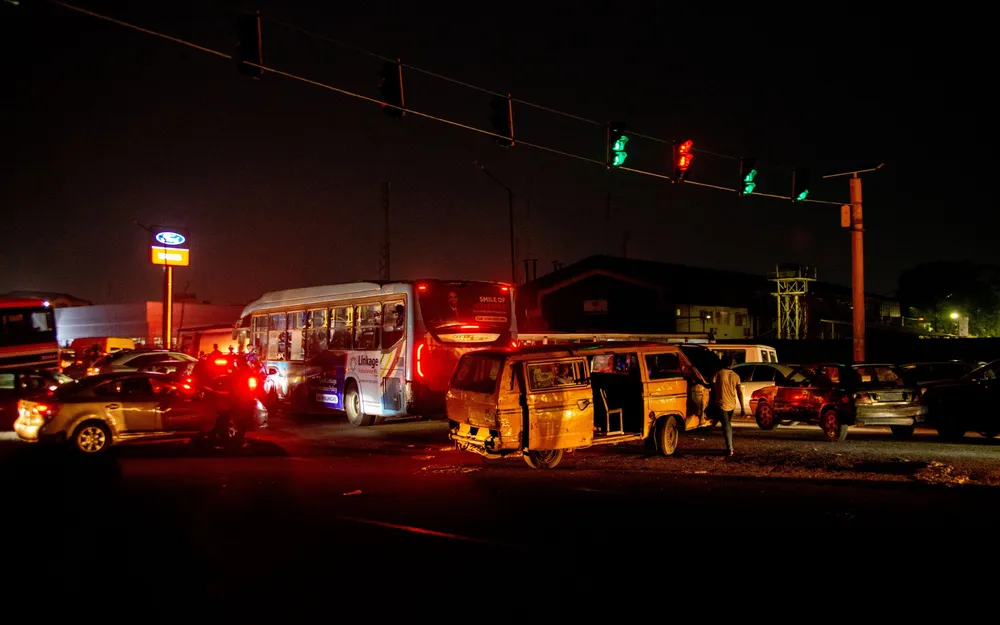
A right-turn squeeze can occur when a passenger vehicle becomes trapped between an 18-wheeler and a curb, barrier, or other object.
Imagine that an 18-wheeler moves left as it approaches an intersection.
You are traveling in the lane to the truck’s right.
The truck then begins turning right.
As the tractor swings around the intersection, the trailer moves across your path.
You may suddenly have nowhere to go.
The trailer can strike your vehicle or squeeze it against the curb.
Who Is Responsible?
Responsibility depends on the facts.
Investigators may ask:
- Which lanes were available?
- Was there a designated turn lane?
- Where was the truck positioned?
- Where was your vehicle?
- Was your vehicle already beside the truck?
- Did the truck driver signal?
- How long was the signal activated?
- Could you reasonably tell that the truck intended to turn?
- Did the driver check mirrors?
- Did the driver know your vehicle was there?
- Was the truck moving too quickly?
These questions are more useful than simply saying, "Trucks make wide turns."
What If I Thought the Truck Was Going Straight?
That may be understandable depending on the truck’s position and signaling.
If the truck moved substantially left without giving clear notice that it intended to turn right, surrounding motorists may reasonably interpret the truck’s movement differently.
Video can be particularly valuable in these cases.
Surveillance footage may show the truck’s approach to the intersection, its lane position, turn signal, and the location of your vehicle.
What If the Truck Did Not Use Its Turn Signal?
A missing or late signal can be significant.
Drivers use turn signals to communicate intended movements to surrounding traffic.
If a tractor-trailer requires an unusual lane position to make a turn, clear signaling may be especially important.
Witnesses, dashcams, business cameras, traffic cameras, or other video may help determine whether the truck’s signal was activated.
The truck itself may also need inspection if there is a claim that a signal malfunctioned.
What If the Truck Driver Says I Tried to Pass on the Right?
That is a common factual dispute in this type of collision.
The trucking company may claim you attempted to drive around a turning truck.
Your version may be that you were already traveling lawfully in your lane before the truck began moving right.
Physical evidence may help.
Investigators can examine:
- damage locations;
- scrape marks;
- vehicle resting positions;
- roadway markings;
- photographs;
- video;
- witnesses; and
- electronic information.
The location of damage along your vehicle may provide clues about how the collision occurred.
What If I Was in the Truck’s Blind Spot?
Large trucks have significant blind areas.
But blind spots are known characteristics of commercial vehicles.
The existence of a blind spot does not necessarily excuse a driver from checking the area before turning.
The investigation should determine whether the driver used available mirrors or cameras and whether the driver should have known your vehicle was present.
Could the Driver Have Been Distracted?
Yes.
A driver preparing for a complicated turn should be focused on traffic, pedestrians, signals, mirrors, and the trailer’s movement.
Distraction from a cellphone, GPS, dispatch device, paperwork, or another source can interfere with that process.
Potential evidence may include:
- cellphone information;
- dispatch communications;
- dashcam footage;
- driver-facing camera footage; and
- company electronic records.
Could Inadequate Training Be Involved?
Potentially.
Safely turning a tractor-trailer requires specialized skill.
A commercial driver needs to understand:
- off-tracking;
- trailer clearance;
- blind areas;
- mirror use;
- lane positioning;
- speed control; and
- intersection hazards.
If the driver’s maneuver appears unsafe, qualification and training records may deserve review.
Could the Trucking Company Be Responsible?
The trucking company’s role may extend beyond simply employing or contracting with the driver.
Depending on the facts, investigators may examine:
- driver qualification;
- training;
- supervision;
- prior incidents;
- safety policies; and
- company knowledge of unsafe driving.
The exact legal responsibility of each company depends on its relationship to the driver and its conduct.
What If the Tractor and Trailer Have Different Owners?
That is possible.
Commercial transportation operations can involve separately owned tractors and trailers.
Photograph identifying information on both whenever possible.
Relevant information can include:
- tractor number;
- trailer number;
- company name;
- USDOT number;
- license plates; and
- other markings.
Identifying ownership does not automatically establish fault, but it can help investigators understand the commercial relationships involved.
What Evidence Should Be Preserved?
Potential evidence includes:
- intersection surveillance;
- traffic-camera footage;
- dashcam footage;
- truck camera footage;
- photographs;
- witness statements;
- police reports;
- driver qualification records;
- training records;
- GPS information;
- dispatch records; and
- electronic vehicle information.
The intersection itself should also be documented before road markings or construction conditions change.
What Injuries Can Occur?
A turning trailer can push a passenger vehicle into a curb, barrier, pole, another vehicle, or pedestrian area.
Potential injuries include:
- traumatic brain injuries;
- neck and back injuries;
- spinal injuries;
- fractures;
- shoulder injuries;
- internal injuries;
- crush injuries;
- nerve damage;
- paralysis; and
- permanent impairment.
Motorcyclists, bicyclists, and pedestrians may face especially severe consequences.
What If I Need Surgery?
Keep detailed medical documentation.
A serious injury may involve:
- emergency care;
- hospitalization;
- diagnostic imaging;
- injections;
- surgery;
- rehabilitation;
- physical therapy; and
- future treatment.
Also document missed work and any restrictions placed on your employment.
What Insurance Could Apply?
The motor carrier may have commercial liability insurance. Depending on the facts, additional insurance could potentially be associated with other legally responsible businesses or additional layers of coverage.
The actual policies must be identified.
Do not assume the insurance card at the scene represents every possible source of coverage.
What Should I Do After the Accident?
Get medical care first.
If you can safely do so, preserve photographs of:
- the truck;
- trailer;
- intersection;
- lane markings;
- signs;
- vehicle damage; and
- surrounding cameras.
Get witness information.
Save your dashcam footage immediately.
Keep insurance correspondence and avoid signing documents you do not understand.
Jacqueline Scott & Associates Investigates Turning 18-Wheeler Wrecks
The trucking company may say its driver "had to swing wide."
That does not answer whether the maneuver was performed safely.
The investigation should determine where the truck was positioned, whether the driver signaled, whether your vehicle was already present, what the driver could see, and whether the truck driver allowed sufficient clearance.
Jacqueline Scott & Associates can investigate serious Louisiana 18-wheeler accidents involving truck drivers, motor carriers, electronic evidence, video, training, and commercial insurance.
Make ’Em Pay.
Call Jacqueline Scott & Associates at (318) 746-5997.
Every case is different. Results depend on the specific facts and circumstances of each individual matter. Prior results do not guarantee a similar outcome. This article provides general educational information and is not legal advice.
This article is general information about Louisiana law and is not legal advice. Laws and deadlines can change, and every case depends on its own facts. Past results do not guarantee or predict future outcomes. Reading this page or contacting the firm does not by itself create an attorney-client relationship.