
On this page
- High-Risk Commercial Freight Corridors in Bossier City
- Common Causes of 18-Wheeler Collisions
- Identifying All Liable Parties in an 18-Wheeler Crash
- Preserving Vital Electronic and Physical Evidence
- Sending Formal Spoliation Letters
- Louisiana's 2026 Comparative Fault Law and Filing Deadlines
- Catastrophic Injuries and Available Financial Recovery
- Damages You Can Recover
- Frequently Asked Questions
- Contact Jacqueline A. Scott & Associates After a Bossier City 18-Wheeler Crash
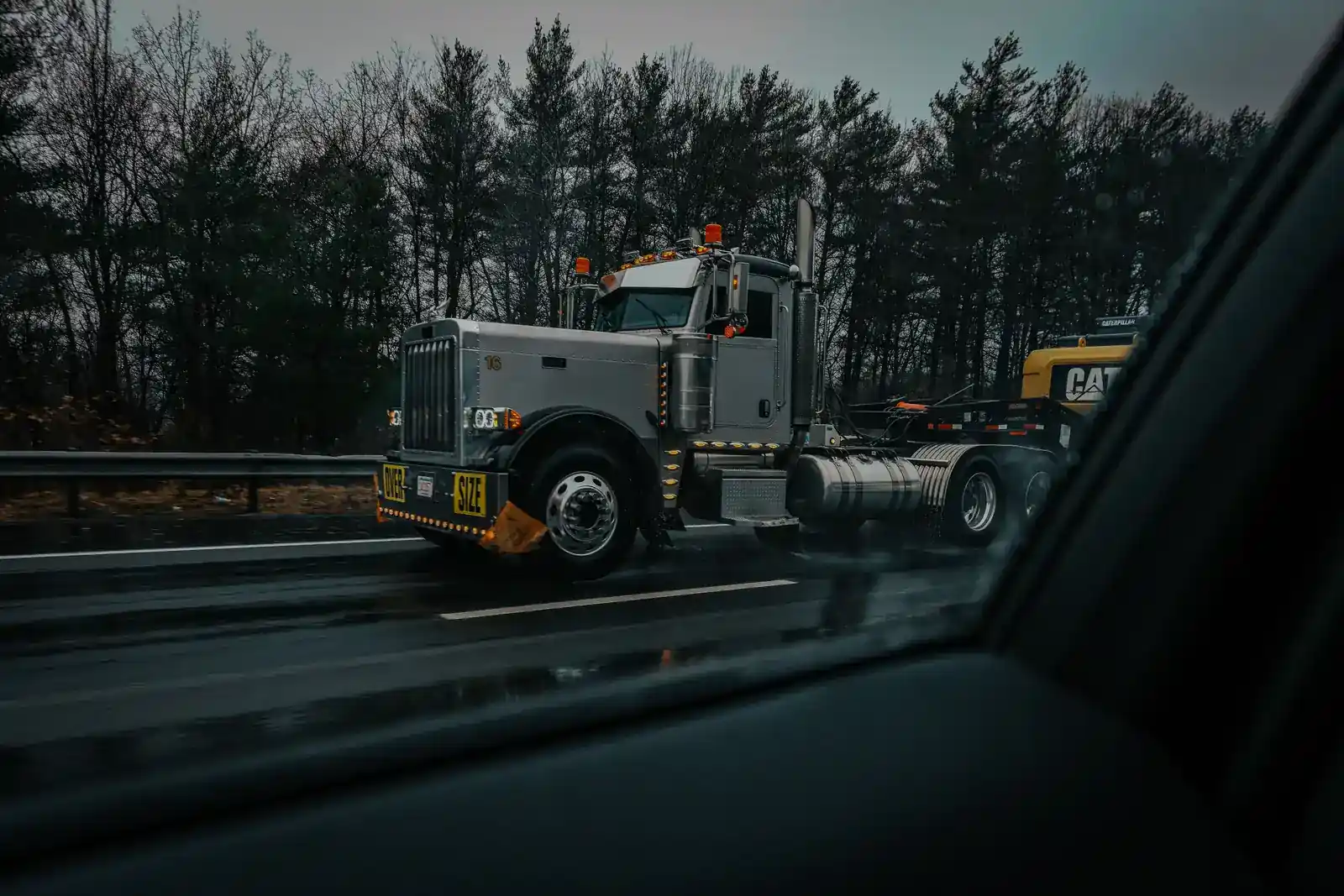
The massive size and weight disparity of commercial rigs often result in catastrophic physical injuries, extensive property damage, and severe financial distress for occupants of smaller passenger vehicles.
At Jacqueline A. Scott & Associates, we understand the technical, regulatory, and corporate complexities involved in commercial vehicle litigation. For over 35 years, our legal team has held negligent trucking companies, freight carriers, and commercial drivers accountable throughout Bossier City, Shreveport, and Northwest Louisiana. Call us today at (318) 746-5997 for a free, confidential case evaluation.
High-Risk Commercial Freight Corridors in Bossier City
Bossier City serves as a major logistical hub for interstate shipping, regional freight, and industrial traffic in Northwest Louisiana. Heavy commercial traffic moving through local highways increases the risk of severe 18-wheeler collisions.
High-risk zones for commercial vehicle crashes:
- Interstate 20 Corridor: High-speed interstate traffic, dense freight routes, and frequent lane changes near major interchanges.
- Interstate 220 Loop: Heavy commercial bypass route utilized by long-haul tractor-trailers maneuvering around metro traffic.
- U.S. Route 71 (Barksdale Boulevard): Heavy freight and delivery truck traffic servicing commercial zones and Barksdale Air Force Base.
- Louisiana Highway 3 (Benton Road) & LA-3105 (Airline Drive): Commercial delivery traffic moving through congested retail corridors and suburban intersections.
- Red River Bridge Crossings: Sudden slowdowns and narrow lanes on bridge crossings connecting Bossier City to Shreveport.
Common Causes of 18-Wheeler Collisions
Unlike passenger vehicle accidents, commercial 18-wheeler crashes often stem from a combination of driver fatigue, improper loading, mechanical failures, and corporate oversight failures.
Factors frequently causing 18-wheeler crashes:
- Hours of Service (HOS) Violations: Drivers operating beyond federal driving limits in violation of safety rules established by the Federal Motor Carrier Safety Administration (FMCSA).
- Distracted Driving: Operating dispatch monitors, mobile devices, or navigation systems while driving heavy commercial rigs.
- Improperly Loaded or Overloaded Cargo: Unbalanced freight shifting during transit, causing jackknife accidents, rollover crashes, or spilled cargo hazards on the roadway.
- Inadequate Fleet Maintenance: Failing to regularly inspect, repair, or replace worn brakes, bald tires, steering components, and trailer couplings.
- Inexperienced or Unqualified Drivers: Motor carriers hiring under-trained operators or failing to conduct background checks for prior safety violations.
- Speeding & Aggressive Driving: Traveling too fast for road, weather, or traffic conditions, greatly extending the distance required to come to a full stop.
Identifying All Liable Parties in an 18-Wheeler Crash
Commercial truck claims involve multiple potential defendants. Uncovering every source of liability is essential to recovering full compensation for severe injuries.
Parties that may share legal responsibility:
- The Truck Driver: For reckless driving, speeding, distraction, or operating under the influence.
- The Trucking Company / Motor Carrier: For negligent hiring, improper training, pressure to violate safety rules, or failure to maintain vehicles.
- Cargo Loaders & Logistics Companies: For improperly securing cargo or exceeding legal gross weight limits.
- Maintenance & Repair Vendors: For negligent mechanical repairs or failure to detect dangerous components during inspections.
- Vehicle & Component Manufacturers: For defective truck components, such as faulty braking systems, tire blowouts, or steering failures.
Preserving Vital Electronic and Physical Evidence
Trucking companies and their corporate insurance carriers deploy defense teams to the accident scene almost immediately. Critical electronic and physical evidence must be secured before it is altered, deleted, or destroyed under standard corporate retention policies.
Essential evidence in commercial 18-wheeler investigations:
- Electronic Logging Device (ELD) Data: Digital records proving how long the driver was behind the wheel prior to the crash.
- Event Data Recorder ("Black Box") Data: Electronic telemetry capturing truck speed, braking patterns, throttle position, and steering input leading up to impact.
- Dashcam Footage: Forward-facing or cab-mounted video footage documenting road conditions and driver behavior.
- Driver Qualification Files: Background check records, drug screening results, medical certifications, and driving logs.
- Maintenance & Inspection Logs: Detailed records verifying whether the truck met federal safety standards.
Sending Formal Spoliation Letters
To prevent trucking companies from destroying or overwriting digital evidence, an experienced attorney sends a formal spoliation letter immediately following the crash. This legal notice obligates the motor carrier to preserve all physical truck parts, digital records, and inspection logs under penalty of court sanctions.
Louisiana's 2026 Comparative Fault Law and Filing Deadlines
Recovering compensation following an 18-wheeler accident requires navigating Louisiana's statutory legal framework.
Modified Comparative Fault Rule
For collisions occurring on or after January 1, 2026, Louisiana applies a modified comparative fault rule under Louisiana Civil Code Article 2323:
- 50% or Less Fault: You can recover compensation, but your total financial award is reduced by your assigned percentage of responsibility.
- 51% or More Fault: You are legally barred from receiving any monetary compensation.
Commercial insurance companies attempt to shift blame onto passenger vehicle drivers to pass this 51% threshold and avoid paying high-value claims. Early evidence collection is critical to defending against these tactics.
Liberative Prescriptive Period (Statute of Limitations)
Under Louisiana Civil Code Article 3493.1, you have two years from the date of the injury to file a formal lawsuit for claims arising on or after July 1, 2024. Failing to initiate legal proceedings at the Bossier Parish Courthouse (26th Judicial District Court) in Benton before the two-year deadline permanently bars your right to compensation.
Catastrophic Injuries and Available Financial Recovery
The intense physical force generated by a fully loaded 18-wheeler often results in life-altering injuries requiring extensive medical intervention.
Severe injuries resulting from 18-wheeler crashes:
- Traumatic brain injuries (TBIs) and permanent cognitive impairment.
- Spinal cord injuries, herniated discs, and complete or partial paralysis.
- Traumatic amputations and crushed limbs.
- Severe burn injuries caused by fuel tank ruptures or hazardous material spills.
- Multiple bone fractures requiring reconstructive surgery.
Damages You Can Recover
If a commercial truck driver or motor carrier caused your injuries, eligible compensation includes:
- Current and Future Medical Bills: Coverage for emergency transport, ICU care, surgeries, physical therapy, home modifications, and specialized long-term care.
- Lost Income and Earning Capacity: Reimbursement for wages lost during recovery, as well as compensation for permanent disability that limits future earning potential.
- Pain and Suffering: Recovery for physical pain, emotional anguish, trauma, loss of consortium, and reduced quality of life.
- Property Damage: Funds to replace your totaled vehicle and personal belongings damaged in the collision.
Frequently Asked Questions
Why are 18-wheeler cases more complex than regular car accident claims?
18-wheeler cases involve complex federal safety regulations, multiple potential defendants, high-value corporate insurance policies, and specialized digital evidence like black box data and ELD logs.
What is a spoliation letter and why is it important in an 18-wheeler case?
A spoliation letter is a legal directive sent to the trucking company ordering them to preserve all electronic data, vehicle parts, and records. Without this notice, trucking companies may legally overwrite digital logs or repair the truck, destroying crucial evidence.
Who investigates 18-wheeler crashes in Bossier Parish?
Commercial truck accidents are investigated by law enforcement agencies such as the Louisiana State Police Troop G (which includes specialized commercial vehicle enforcement officers), the Bossier Parish Sheriff's Office, or the Bossier City Police Department.
How long do I have to file an 18-wheeler accident lawsuit in Louisiana?
Under Louisiana Civil Code Article 3493.1, you generally have two years from the date of the crash to file a lawsuit for injuries occurring on or after July 1, 2024.
Contact Jacqueline A. Scott & Associates After a Bossier City 18-Wheeler Crash
If you or a loved one has been injured in a commercial 18-wheeler collision, you do not have to confront giant trucking companies and corporate insurers alone. At Jacqueline A. Scott & Associates, we bring over 35 years of legal experience, aggressive advocacy, and personal dedication to every client we represent.
Schedule your free, confidential consultation today. Call our team at (318) 746-5997 or visit our local office at 401 Hamilton Road, Suite 110 in Bossier City. Let our firm fight for the justice and full financial compensation you deserve.
This article is general information about Louisiana law and is not legal advice. Laws and deadlines can change, and every case depends on its own facts. Past results do not guarantee or predict future outcomes. Reading this page or contacting the firm does not by itself create an attorney-client relationship.


