On this page
- Car Accidents on Hammond’s Transportation Network
- Common Types of Hammond Car Accidents
- What Should You Do After a Car Accident in Hammond?
- Why Crash Evidence Matters
- Louisiana’s Current Comparative-Fault Rule
- Louisiana’s Minimum Auto Insurance Requirements
- What If the Other Driver Does Not Have Enough Insurance?
- What Damages May Be Available After a Hammond Car Accident?
- How Long Do You Have After a Louisiana Car Accident?
- Where Could a Hammond Car Accident Case Be Handled?
- Why Trust Jacqueline Scott With Your Hammond Car Accident Case?
- Frequently Asked Questions About Hammond Car Accidents
When injuries are involved, understanding what happened and preserving the available evidence can become especially important.
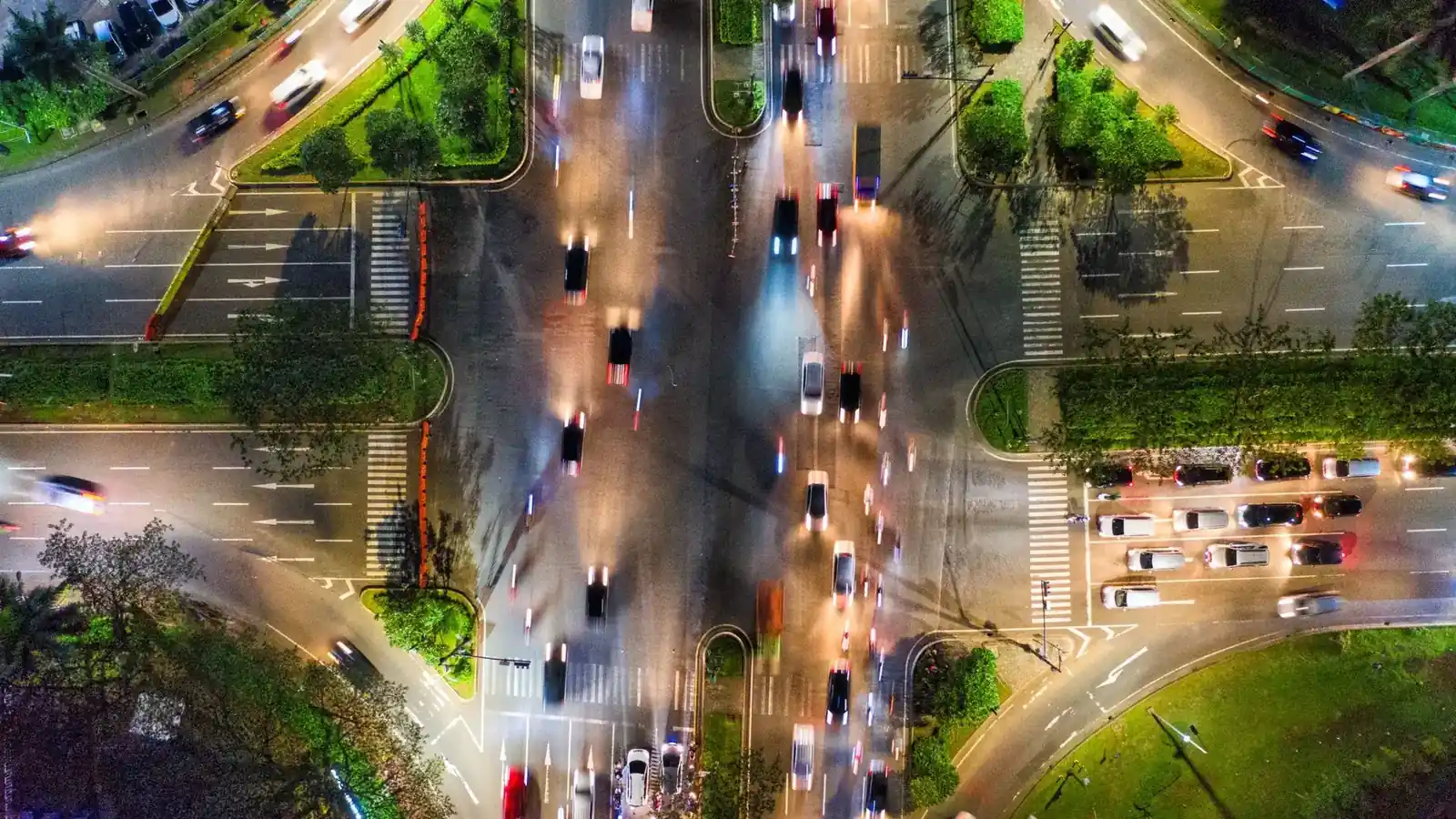
Hammond sits at a major transportation crossroads in southeast Louisiana. I-12 and I-55 intersect near the city, while U.S. 190 and local roads carry traffic through Hammond and surrounding Tangipahoa Parish. Louisiana DOTD describes I-12 and I-55 as the anchors of its Hammond District transportation network and specifically identifies congestion where commuter and freight traffic meet around the I-12/I-55 interchange.
A Hammond car accident lawyer can investigate the collision, review insurance coverage, preserve evidence, and determine how Louisiana’s current comparative-fault rules may affect an injury claim.
Car Accidents on Hammond’s Transportation Network
Hammond’s location creates a mixture of local and regional traffic.
I-12 provides east-west travel between Baton Rouge and Slidell, while I-55 connects north toward Mississippi and south toward the New Orleans area. U.S. 190 and Louisiana highways provide additional connections through Hammond and nearby communities.
DOTD’s current planning materials specifically identify the I-12/I-55 interchange as an area where traffic bottlenecks occur and note continuing investments involving I-12 widening, bridge preservation, and roadway rehabilitation.
Those transportation facts provide local context. They do not establish that either interstate is inherently dangerous or that roadway design caused a particular collision.
When investigating an accident, the roadway configuration, traffic movements, weather, vehicle positions, driver actions, and other available evidence must be considered individually.
Common Types of Hammond Car Accidents
Car accident claims can arise from many different collision patterns, including:
- Rear-end collisions
- Intersection crashes
- Side-impact accidents
- Head-on collisions
- Lane-change crashes
- Merging accidents
- Multi-vehicle collisions
- Distracted-driving crashes
- Speed-related accidents
- Accidents involving uninsured or underinsured motorists
The type of collision may provide useful information about how the accident occurred, but it does not automatically establish legal responsibility.
For example, even when a rear-end crash initially appears straightforward, investigators may still examine traffic conditions, vehicle positions, witness accounts, photographs, and other available evidence before reaching conclusions about fault.
What Should You Do After a Car Accident in Hammond?
Safety and appropriate medical attention should come first.
For accidents occurring within Hammond city limits, the Hammond Police Department Traffic Division responds to and handles traffic crashes ranging from property-damage collisions to accidents involving injuries and fatalities. The department lists 985-277-5737 for its Traffic Division and 985-277-5700 as the department’s non-emergency number.
When circumstances allow it to be done safely, useful steps after a collision may include:
- Photographing all involved vehicles
- Photographing the roadway and surrounding area
- Recording visible traffic signs or signals
- Getting witness contact information
- Exchanging driver and insurance information
- Saving police-report information
- Keeping towing and repair records
- Preserving medical bills and records
- Saving communications with insurance companies
No one should remain in moving traffic or expose themselves to another hazard simply to collect evidence.
Why Crash Evidence Matters
Drivers involved in the same accident may provide very different descriptions of what occurred.
One driver may claim another vehicle changed lanes without warning. Drivers may disagree about who had the right of way, whether a traffic signal had changed, how quickly vehicles were traveling, or what occurred immediately before impact.
Potential evidence may include:
- Police reports
- Scene photographs
- Witness statements
- Dash-camera video
- Nearby surveillance footage
- Vehicle damage
- Electronic vehicle information
- Traffic-control information
- Cell-phone records when legally obtainable
The available evidence varies from accident to accident.
Businesses may eventually overwrite surveillance recordings, vehicles may be repaired, and witnesses can become harder to locate. That makes timely investigation valuable when fault is disputed.
Louisiana’s Current Comparative-Fault Rule
Louisiana’s comparative-fault law changed significantly for claims governed by the law effective January 1, 2026.
Under current Civil Code Article 2323, when someone suffers an injury partly because of that person’s own negligence and partly because of another person’s fault, the injured person’s percentage of negligence can directly affect recovery.
If the injured person is found 51% or more negligent, that person is not entitled to recover damages under the general rule. If the person’s negligence is less than 51%, recoverable damages are reduced according to the percentage of negligence assigned to that person.
That makes disputes about fault particularly significant after a Hammond car accident.
An insurance company’s initial determination of fault does not itself determine the final legal allocation of responsibility.
Louisiana’s Minimum Auto Insurance Requirements
Louisiana requires automobile owners to maintain liability insurance.
The Louisiana Department of Insurance identifies the state’s required minimum liability limits as 15/30/25:
- $15,000 for bodily injury to one person
- $30,000 for bodily injury to more than one person in one accident
- $25,000 for damage to another person’s vehicle or other property
Liability coverage generally pays for bodily injury or property damage for which the insured is legally responsible, up to the applicable policy limits.
Those amounts are minimum requirements. They do not tell someone how much insurance is actually available after a particular Hammond collision, and they do not establish what an injury claim is worth.
What If the Other Driver Does Not Have Enough Insurance?
Uninsured and underinsured motorist coverage—commonly called UM/UIM—can become important when another driver has no applicable liability coverage or insufficient coverage for the losses involved.
Louisiana law does not simply require every policyholder to carry UM/UIM coverage. The Louisiana Department of Insurance explains that insurers are required to offer it and applicants may accept or reject coverage according to Louisiana’s statutory framework.
Determining whether UM/UIM coverage applies requires reviewing the actual policy and legally effective coverage selections.
Someone should not assume either that coverage exists or that it does not.
What Damages May Be Available After a Hammond Car Accident?
There is no standard value for a Hammond automobile accident claim.
Depending on the evidence and applicable law, potential losses may include:
Medical expenses. Accident-related medical treatment and documented expenses may become part of a claim.
Lost wages. Payroll and employment records can help establish income lost because of time away from work.
Future losses. More serious injuries may create future medical or earning consequences when supported by appropriate evidence.
Property damage. Repair or replacement of the damaged vehicle may need to be addressed separately or alongside an injury claim.
Non-economic damages. Certain non-financial effects of an injury may also be legally recoverable depending on the circumstances.
The severity of the vehicle damage alone does not determine the value of an injury claim.
How Long Do You Have After a Louisiana Car Accident?
Louisiana Civil Code Article 3493.1 generally provides a two-year liberative prescription period for delictual actions beginning on the day the injury or damage is sustained.
The current provision became effective July 1, 2024.
The specific deadline should still be evaluated individually. Older accidents, particular defendants, different claims, and other circumstances may affect the applicable rule.
There are also practical reasons to begin investigating before a legal deadline approaches. Surveillance footage can disappear, vehicles can be repaired, and witnesses’ memories may become less reliable over time.
Where Could a Hammond Car Accident Case Be Handled?
Hammond is located in Tangipahoa Parish, which is served by Louisiana’s 21st Judicial District Court.
The 21st JDC serves Tangipahoa, Livingston, and St. Helena Parishes. The Tangipahoa Parish Courthouse is located at 110 North Bay Street in Amite.
That differs from our previous Covington hub because the district-court facility serving Hammond is not located directly in Hammond.
A collision occurring within Hammond does not automatically mean a resulting lawsuit would be filed at that courthouse. Venue depends on where the accident occurred, where parties are located, and other requirements of Louisiana law.
Why Trust Jacqueline Scott With Your Hammond Car Accident Case?
Attorney Jacqueline Scott has more than 35 years of legal experience representing injured people in Louisiana. Jacqueline A. Scott & Associates handles car accidents as well as commercial truck crashes, 18-wheeler accidents, catastrophic injuries, wrongful death, and other serious personal injury matters.
Her professional background includes serving as a clerk for two District Court judges, an assistant to a Louisiana State Senator, a paralegal instructor, and a probation and parole officer.
A Hammond car accident claim may require investigating local police records, evaluating evidence from the collision, determining fault under Louisiana’s current comparative-fault system, and identifying available liability and UM/UIM insurance coverage.
Make ’Em Pay.
Make ’Em Pay is established Jacqueline A. Scott & Associates branding.
For a Hammond car accident claim, it means pursuing accountability when the evidence and Louisiana law support holding another driver or party responsible.
It does not mean assuming another driver was negligent, and it does not guarantee compensation or a particular outcome.
If you were injured in a car accident in Hammond or elsewhere in Tangipahoa Parish, Jacqueline A. Scott & Associates can review the collision, investigate available evidence and insurance coverage, and explain the legal options that may be available.
Make ’Em Pay.
Frequently Asked Questions About Hammond Car Accidents
What police department investigates accidents inside Hammond?
The Hammond Police Department Traffic Division handles traffic crashes within the City of Hammond. The department lists 985-277-5737 for the Traffic Division.
What are Louisiana’s minimum automobile liability limits?
Louisiana requires minimum liability limits of 15/30/25: $15,000 for bodily injury to one person, $30,000 for bodily injury to multiple people in one accident, and $25,000 for property damage.
Can I recover if I was partly responsible for the accident?
Under the current general rule in Article 2323, an injured person who is less than 51% negligent may potentially recover damages reduced according to that person’s percentage of negligence. Someone found 51% or more negligent generally cannot recover damages.
What if the driver who hit me does not have enough insurance?
UM/UIM coverage may potentially apply, depending on the actual policy, coverage selections, available liability insurance, and circumstances. Louisiana requires insurers to offer UM/UIM coverage but allows applicants to accept or reject it under the statutory framework.
What major highways run through the Hammond area?
Hammond is closely connected to I-12 and I-55, with U.S. 190 and state highways providing additional regional connections. DOTD identifies I-12 and I-55 as the anchors of the Hammond District transportation network.
This article is general information about Louisiana law and is not legal advice. Laws and deadlines can change, and every case depends on its own facts. Past results do not guarantee or predict future outcomes. Reading this page or contacting the firm does not by itself create an attorney-client relationship.