On this page
- Commercial Truck Accidents Are Not Limited to 18-Wheelers
- Hammond’s I-12 and I-55 Commercial Traffic Network
- A Truck Accident Investigation Can Go Beyond the Driver
- Important Evidence After a Hammond Truck Accident
- Federal Hours-of-Service Rules
- Maintenance and Inspection Records
- Preserving Commercial Truck Evidence
- Insurance Can Be More Complicated in a Commercial Accident
- What Damages May Be Available?
- Louisiana’s Deadline for Truck Accident Claims
- Hammond Truck Cases and the 21st Judicial District
- Why Trust Jacqueline Scott With Your Hammond Truck Accident Case?
- Frequently Asked Questions About Hammond Truck Accidents
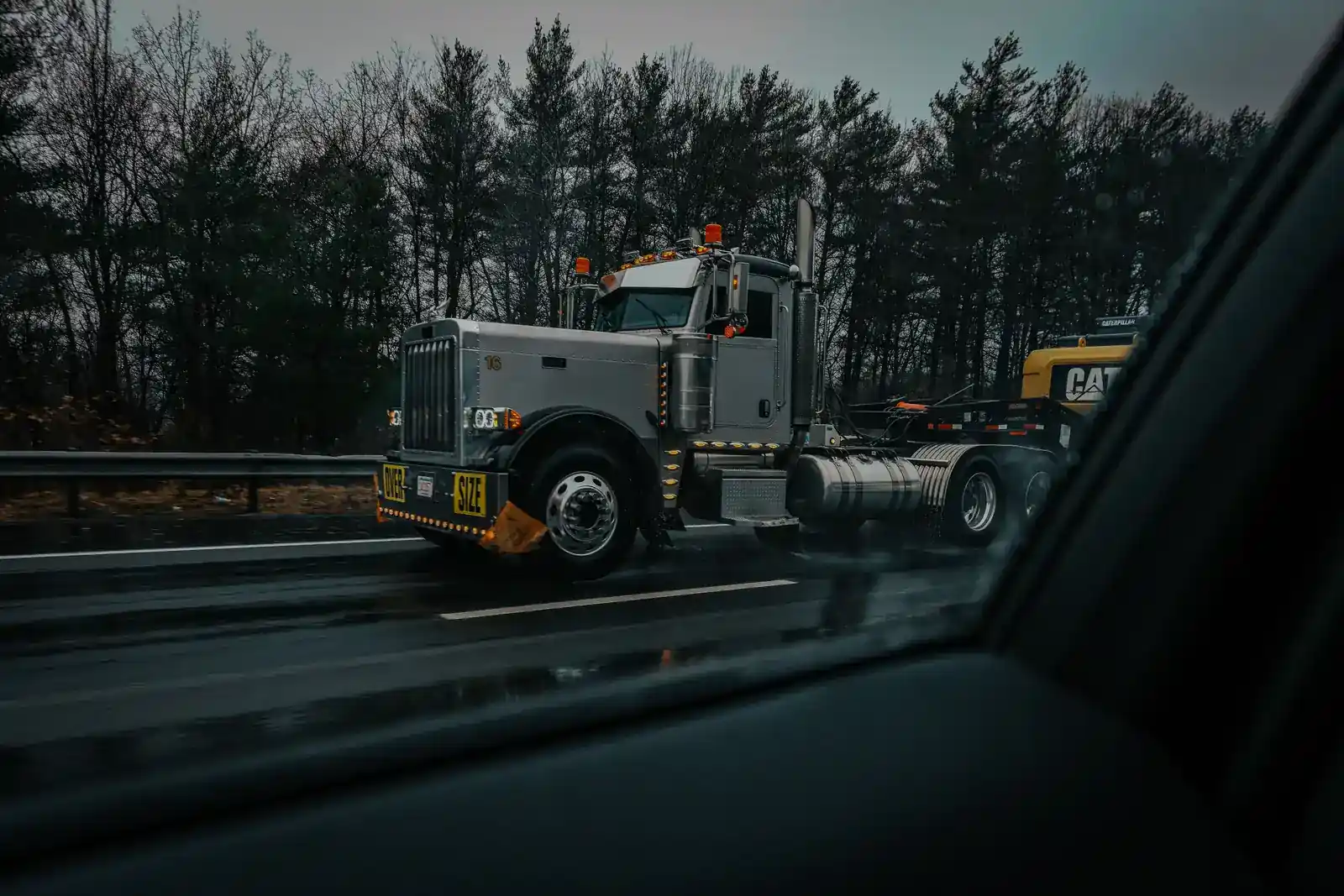
Trucks moving east and west between Baton Rouge and Slidell share the region with vehicles traveling north toward Mississippi or south toward the New Orleans area, while U.S. 190 and local highways support deliveries and commercial traffic throughout Tangipahoa Parish.
Louisiana DOTD describes I-12 and I-55 as the anchors of its Hammond District transportation network and specifically notes that heavy commuter and freight traffic meet on I-12, with additional bottlenecks around the I-12/I-55 interchange.
When a commercial vehicle is involved in an injury collision, the investigation may extend far beyond the person behind the wheel. A Hammond truck accident lawyer may need to examine the driver’s actions, the company operating the vehicle, maintenance history, employment relationships, electronic information, insurance coverage, and applicable state or federal regulations.
Commercial Truck Accidents Are Not Limited to 18-Wheelers
This page focuses broadly on commercial truck accidents, rather than only tractor-trailer crashes.
Commercial vehicles operating around Hammond may include:
- Delivery trucks
- Box trucks
- Dump trucks
- Construction vehicles
- Utility trucks
- Landscaping and service vehicles
- Cargo vans
- Work trucks
- Tractor-trailers
That distinction matters because the evidence, insurance, ownership structure, and regulations involved can vary considerably depending on the vehicle and its operation.
Our separate Hammond 18-Wheeler Accident Lawyer page will focus specifically on tractor-trailers, ELD information, cargo evidence, and other issues particularly relevant to large combination vehicles.
Hammond’s I-12 and I-55 Commercial Traffic Network
Hammond is different from many smaller Louisiana communities because two major interstate corridors meet in the area.
DOTD describes I-12 as the east-west connection between Baton Rouge and Slidell and I-55 as the north-south connection toward Mississippi and New Orleans. U.S. 190 and state highways further connect surrounding communities.
This can put local motorists on the same transportation network as regional commercial traffic.
A truck collision might occur on an interstate, but commercial crashes can also happen on city streets and local roads while drivers are making deliveries, entering businesses, traveling between job sites, or returning to interstate routes.
The presence of commercial traffic does not mean truck drivers or trucking companies are automatically responsible for Hammond accidents. Fault must be established from the evidence in the individual collision.
A Truck Accident Investigation Can Go Beyond the Driver
One important difference between a commercial truck collision and an ordinary two-car accident is the potential involvement of a business.
A truck may be driven by an employee, contractor, owner-operator, or another person operating within a commercial arrangement.
Depending on the facts, an investigation may examine the roles of:
The driver. The driver’s conduct immediately before the collision may be important.
The motor carrier or employer. Hiring, supervision, dispatch decisions, safety procedures, and other company records may become relevant depending on the legal issues involved.
The vehicle owner. The company operating a truck is not necessarily the company that owns it.
Maintenance providers. If mechanical condition becomes relevant, inspection and repair records may need to be reviewed.
Cargo or loading companies. In appropriate cases, how a vehicle was loaded or secured may be part of the investigation.
Identifying a company in the chain of operations does not automatically establish that it is legally responsible.
Important Evidence After a Hammond Truck Accident
Commercial operations can generate records that do not ordinarily exist in a passenger-car case.
Depending on the vehicle and operation, relevant evidence may include:
- Driver qualification information
- Dispatch records
- GPS or telematics information
- Electronic logging device records when applicable
- Employment or contractor documents
- Vehicle inspection records
- Maintenance and repair records
- Bills of lading or delivery records
- Company safety policies
- Dash-camera footage
- Electronic vehicle information
- Insurance policies
- Post-accident investigation materials
Not every truck accident will involve every category.
The purpose of obtaining these records is to determine what actually happened—not to assume that a regulatory violation or company failure occurred.
Federal Hours-of-Service Rules
Certain commercial drivers are subject to Federal Motor Carrier Safety Administration hours-of-service requirements.
For property-carrying drivers subject to the general rules, FMCSA currently provides that a driver may drive a maximum of 11 hours after 10 consecutive hours off duty and generally may not drive beyond the 14th consecutive hour after coming on duty following 10 consecutive hours off duty.
The general rules also require a 30-minute break after eight cumulative hours of driving without at least a 30-minute qualifying interruption. A qualifying 30-minute period may include certain consecutive non-driving time. Exceptions and specialized rules can apply depending on the operation.
Hours-of-service information may become relevant when investigating driver schedules and duty time.
However, exceeding a regulatory limit should not be automatically translated into a conclusion that a driver was fatigued or that the violation caused the collision. Those are separate factual and legal questions requiring evidence.
Maintenance and Inspection Records
The mechanical condition of a commercial vehicle can also become important.
Federal motor-carrier regulations impose inspection, repair, and maintenance requirements on covered commercial vehicles. FMCSA also requires qualifying commercial vehicles to undergo a periodic inspection at least once every 12 months.
Depending on the allegations, investigators may examine records involving:
- Brakes
- Tires
- Steering components
- Lighting
- Previous reported defects
- Repairs
- Preventive maintenance
- Required inspections
The existence of a maintenance record—or even a defect—does not by itself establish that the condition caused an accident. The evidence must connect the issue to the collision when causation is disputed.
Preserving Commercial Truck Evidence
Some of the most important information in a truck accident case may be controlled by a business rather than the injured person.
That makes preservation especially important.
Relevant companies may need to be placed on notice to preserve particular records, depending on the case. This could include electronic information, dispatch communications, driver records, maintenance documents, video, or other materials.
Meanwhile, evidence from the scene can change quickly. Vehicles are repaired, surveillance footage may be overwritten, and witnesses become more difficult to locate.
Early investigation can help identify what information exists and where it may be stored.
Insurance Can Be More Complicated in a Commercial Accident
A commercial truck collision may involve insurance questions that are different from those in a typical passenger-car crash.
Depending on the circumstances, there could be coverage associated with a driver, employer, motor carrier, vehicle owner, contractor, or another business involved in the operation.
The existence of multiple companies does not necessarily mean multiple insurance policies will provide coverage.
Policy language, insured parties, exclusions, contractual relationships, and the facts of the collision all need to be examined.
Similarly, the amount of available insurance does not determine what an injury claim is worth.
What Damages May Be Available?
If the evidence supports liability, a Hammond truck accident claim may involve damages such as:
- Medical expenses
- Lost wages
- Future medical expenses when appropriately supported
- Loss of earning capacity when supported by evidence
- Property damage
- Certain legally recoverable non-economic losses
Serious commercial vehicle accidents can produce significant losses, but the size of the truck alone does not establish the amount of damages.
Medical records, employment information, expert opinions where appropriate, insurance information, and other evidence must support the claimed losses.
Louisiana’s Deadline for Truck Accident Claims
Louisiana Civil Code Article 3493.1 generally provides a two-year liberative prescription period for delictual actions, beginning on the day the injury or damage is sustained. The current provision became effective July 1, 2024.
The applicable deadline should still be evaluated based on the particular collision. Accident dates, defendants, causes of action, and other circumstances may affect the analysis.
Truck cases also create another reason not to focus exclusively on the filing deadline: commercial records and electronic information may have their own retention practices. Waiting can make an investigation more difficult even when time remains to file a lawsuit.
Hammond Truck Cases and the 21st Judicial District
Hammond is located in Tangipahoa Parish, which is part of Louisiana’s 21st Judicial District along with Livingston and St. Helena Parishes.
The Tangipahoa Parish courthouse serving the 21st Judicial District is located in Amite, rather than Hammond itself.
A truck accident occurring in Hammond does not automatically mean a lawsuit would be filed in Tangipahoa Parish. Venue can depend on where the collision occurred, where defendants are located, and other provisions of Louisiana law.
For a commercial case, those questions can become particularly important when a trucking company or other defendant is headquartered outside the Hammond area.
Why Trust Jacqueline Scott With Your Hammond Truck Accident Case?
Jacqueline A. Scott & Associates handles truck accident and other serious personal injury cases for clients throughout Louisiana. Attorney Jacqueline Scott has over 35 years of legal experience.
Her professional background includes serving as a clerk for two District Court judges, an assistant to a Louisiana State Senator, a paralegal instructor, and a probation and parole officer. The firm also offers free initial consultations and handles personal injury cases on a contingency basis with no upfront attorney fees, according to its current website.
A Hammond commercial truck case may require investigating not only what happened at the crash scene but also the business relationships, company records, vehicle history, electronic information, and insurance behind the truck.
Make ’Em Pay.
Make ’Em Pay is established Jacqueline A. Scott & Associates branding.
In a Hammond truck accident case, that means pursuing accountability against the parties the evidence and law support holding responsible.
It does not mean assuming a truck driver or company violated the law, and it does not guarantee liability, compensation, or a particular outcome.
If you were injured in a commercial truck collision in Hammond or elsewhere in Tangipahoa Parish, Jacqueline A. Scott & Associates can review the accident, identify potentially relevant trucking records, and explain the legal options that may be available.
Make ’Em Pay.
Frequently Asked Questions About Hammond Truck Accidents
Is every commercial truck accident an 18-wheeler accident?
No. Commercial truck cases can involve delivery trucks, box trucks, dump trucks, construction vehicles, utility vehicles, cargo vans, tractor-trailers, and other vehicles used for business purposes.
What records could matter after a commercial truck crash?
Depending on the operation, relevant records may include driver qualification information, dispatch records, GPS or telematics data, ELD information, maintenance records, inspection documents, delivery records, video, and insurance policies.
How many hours can a property-carrying commercial driver drive?
Under the general FMCSA rules, covered property-carrying drivers may drive up to 11 hours after 10 consecutive hours off duty and generally cannot drive beyond the 14th consecutive hour after coming on duty. Exceptions can apply.
Are commercial trucks required to undergo inspections?
Covered commercial vehicles are subject to federal inspection and maintenance requirements, including a periodic inspection generally required at least once every 12 months.
How long do I have to bring a Louisiana truck accident claim?
Civil Code Article 3493.1 generally provides a two-year prescription period for delictual actions beginning when the injury or damage is sustained. Individual circumstances can affect the applicable deadline.
This article is general information about Louisiana law and is not legal advice. Laws and deadlines can change, and every case depends on its own facts. Past results do not guarantee or predict future outcomes. Reading this page or contacting the firm does not by itself create an attorney-client relationship.