On this page
- Louisiana Changed Its Comparative Fault Law
- Why Does Comparative Fault Matter in an 18-Wheeler Case?
- Evidence Can Decide a Fault Dispute
- Louisiana’s General Personal Injury Deadline Is Now Two Years
- Two Years Does Not Mean You Should Wait
- Call 911 After a Serious Truck Accident
- Keep Your Vehicle
- Keep Every Paper
- Louisiana Changed Its Medical Causation Rule
- Why Prompt Medical Treatment Matters
- Keep Your Follow-Up Appointments
- Louisiana Also Changed Medical Expense Recovery
- What Compensation Can Louisiana Law Allow?
- Are Truck Accident Damages Capped?
- Can Punitive Damages Be Recovered?
- What If a Commercial Driver Was Intoxicated?
- What If an 18-Wheeler Accident Kills Someone?
- Wrongful Death Has Its Own Timing Rule
- Why Truck Cases Require Both Louisiana and Federal Analysis
- Jacqueline Scott & Associates Investigates Louisiana Truck Wrecks
But federal trucking rules are only part of the case.
Louisiana law determines many of the issues that can ultimately affect whether an injured person recovers compensation and how damages are calculated.
Recent changes make that especially important.
Between 2024 and 2026, Louisiana changed several rules affecting personal injury claims, including:
- the general filing deadline for tort claims;
- comparative fault;
- proof of medical causation; and
- recovery of certain past medical expenses.
If you were injured by an 18-wheeler in Shreveport, Bossier City, Caddo Parish, Bossier Parish, or elsewhere in Louisiana, the date of your accident can matter almost as much as the facts of the collision.
At Jacqueline Scott & Associates, we investigate both sides of a serious trucking case: the federal trucking evidence and the Louisiana laws governing fault, damages, deadlines, and recovery.
Make ’Em Pay.
Call (318) 746-5997.
Louisiana Changed Its Comparative Fault Law
Louisiana Civil Code Article 2323 changed effective January 1, 2026.
Under the current law, if an injured person is found 51% or more negligent, that person cannot recover damages.
If the injured person’s negligence is less than 51%, damages are reduced according to that percentage.
That is a major change from Louisiana’s former pure comparative-fault system.
Why Does Comparative Fault Matter in an 18-Wheeler Case?
Because trucking companies and their insurers may attempt to shift part of the blame to the person who was injured.
A trucking defense may argue that you:
- changed lanes improperly;
- merged unsafely;
- entered the truck’s blind spot;
- stopped suddenly;
- were speeding;
- were distracted; or
- failed to avoid the collision.
Those arguments can have major financial consequences under Louisiana’s current law.
Evidence Can Decide a Fault Dispute
A trucking accident should not be reduced to one driver’s word against another.
Potential evidence includes:
- dashcam video;
- truck-camera footage;
- witnesses;
- photographs;
- roadway evidence;
- vehicle damage;
- GPS;
- telematics;
- electronic logging information;
- dispatch communications;
- cellphone evidence where legally obtainable; and
- electronic vehicle information.
The earlier that evidence is identified, the better.
Louisiana’s General Personal Injury Deadline Is Now Two Years
Louisiana Civil Code Article 3493.1 provides that delictual actions are generally subject to a two-year liberative prescriptive period, beginning on the day the injury or damage is sustained.
Louisiana calls this deadline prescription.
The legislation creating the new two-year period became effective July 1, 2024 and applies prospectively as provided by the legislation.
Older accidents must be evaluated under the law that applied when the cause of action arose.
Two Years Does Not Mean You Should Wait
This is particularly important in trucking cases.
The lawsuit deadline may be measured in years.
Evidence may disappear much sooner.
Potentially time-sensitive evidence can include:
- dashcam recordings;
- surveillance footage;
- telematics;
- GPS information;
- electronic truck information;
- dispatch communications; and
- physical evidence from the truck.
A truck may also be repaired and returned to service.
The legal deadline and the evidence-preservation timeline are not the same thing.
Call 911 After a Serious Truck Accident
If an 18-wheeler causes a serious collision, call 911 when you are able to do so safely.
Emergency response serves several purposes.
First, injured people may need immediate medical attention.
Second, law enforcement can document the scene.
Third, emergency personnel may identify witnesses, roadway conditions, vehicle positions, and other information.
Do not put yourself in danger trying to investigate an interstate accident personally.
Keep Your Vehicle
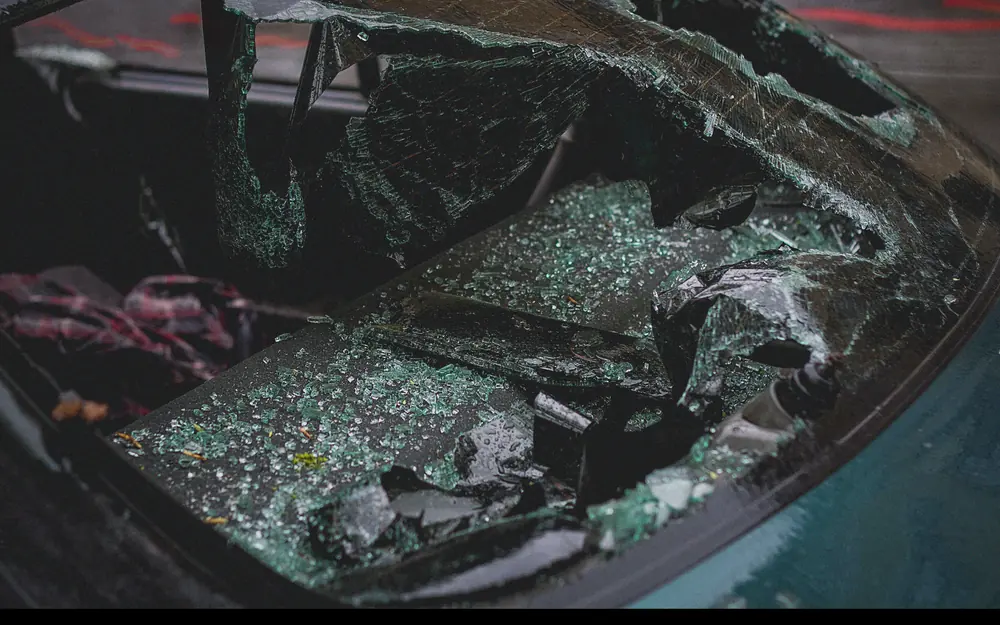
After a catastrophic collision, your damaged vehicle may be evidence.
Before allowing a severely damaged vehicle to be destroyed or disposed of, determine whether it needs to be inspected.
Damage patterns may help experts evaluate:
- impact location;
- direction of force;
- vehicle intrusion;
- collision sequence; and
- crash severity.
Take extensive photographs.
If the vehicle contains a dashcam, preserve the recording.
Keep Every Paper
Truck accident victims can quickly accumulate hundreds of pages of documents.
Keep:
- police information;
- insurance letters;
- medical bills;
- discharge instructions;
- pharmacy receipts;
- work excuses;
- pay records;
- towing bills;
- repair estimates;
- rental-car documents; and
- correspondence from insurance adjusters.
Electronic records should also be saved.
Louisiana Changed Its Medical Causation Rule
For covered personal injury claims, Louisiana Code of Evidence Article 306.1 provides that the lack of a prior history of an illness, injury, or condition does not create a presumption that the accident caused the new condition.
The provision became effective May 28, 2025.
This makes medical documentation particularly important.
Why Prompt Medical Treatment Matters
Suppose you tell an insurer:
“I never had back pain before this truck hit me.”
That fact may still be relevant.
But Louisiana law no longer gives the absence of a prior condition the same automatic presumption of causation that existed under prior jurisprudence.
Medical records can document:
- when symptoms began;
- what symptoms were reported;
- objective findings;
- diagnoses;
- treatment recommendations; and
- medical opinions concerning causation.
Keep Your Follow-Up Appointments
If a doctor recommends follow-up treatment, make reasonable efforts to attend.
Unexplained gaps can become an issue because an insurer may argue:
- the injury improved;
- treatment was unnecessary;
- another event caused later symptoms; or
- the condition was unrelated to the wreck.
There can be legitimate reasons for gaps, including financial problems, transportation, work, family obligations, or appointment availability.
Be accurate about what happened.
Louisiana Also Changed Medical Expense Recovery
Louisiana Revised Statute 9:2800.27 governs recovery of past medical expenses in many personal injury actions.
Current law contains specific rules concerning expenses paid by health insurance, Medicare, Medicaid, and other payment arrangements.
That means the number printed at the top of a hospital bill may not automatically equal the legally recoverable past medical expense.
What Compensation Can Louisiana Law Allow?
Damages can generally be discussed in several categories.
Economic damages
Potential economic losses can include:
- past medical expenses;
- future medical care;
- rehabilitation;
- lost wages;
- diminished earning capacity;
- property damage;
- medical equipment; and
- other measurable financial losses.
Non-economic damages
Depending on the facts and law, recoverable non-economic harm can include consequences such as:
- physical pain;
- mental anguish;
- disability;
- loss of enjoyment of life; and
- other legally compensable effects.
Are Truck Accident Damages Capped?
Louisiana does not impose a general $500,000 damages cap on ordinary personal injury claims against private trucking companies merely because the claim involves a motor vehicle.
Different limitations can apply to particular categories of defendants and claims.
Government claims and qualified medical-malpractice claims, for example, have separate statutory frameworks.
Can Punitive Damages Be Recovered?
Louisiana does not generally award punitive or exemplary damages simply because someone’s negligence was serious.
Specific statutory authority is required.
An important motor-vehicle provision is Civil Code Article 2315.4.
It allows exemplary damages under specified circumstances when injuries are caused by a defendant whose intoxication while operating a motor vehicle was a cause-in-fact of the injuries and whose conduct met the statute’s wanton-or-reckless standard.
What If a Commercial Driver Was Intoxicated?
Evidence may include:
- police investigation;
- toxicology;
- witness observations;
- video;
- company records; and
- legally obtainable testing information.
The availability of exemplary damages should be evaluated from the evidence rather than assumed.
What If an 18-Wheeler Accident Kills Someone?
Louisiana law recognizes both survival and wrongful-death actions.
They are related but distinct.
A survival action concerns damages belonging to the injured person that survive the person’s death.
A wrongful-death action concerns legally recoverable losses suffered by qualifying survivors because of the death.
Louisiana law establishes an order of persons authorized to bring these claims.
Wrongful Death Has Its Own Timing Rule
Current Civil Code Article 2315.2 provides that the wrongful-death action prescribes one year from death or two years from the day injury or damage is sustained, whichever is longer.
A similar timing provision appears in Article 2315.1 for survival actions.
Fatal trucking accidents should be evaluated immediately rather than attempting to calculate the deadline without legal advice.
Why Truck Cases Require Both Louisiana and Federal Analysis
A serious trucking case may require analysis of:
Louisiana law, governing matters such as comparative fault, damages, prescription, and causation.
And:
Federal motor-carrier rules, potentially governing driver qualifications, hours of service, inspections, maintenance, electronic logging, and other safety obligations.
One does not replace the other.
Jacqueline Scott & Associates Investigates Louisiana Truck Wrecks
A trucking company may begin investigating immediately after a catastrophic collision.
The injured person should not assume the crash report contains the whole case.
The investigation may need to answer:
Why did the truck crash?
Was the driver fatigued?
Was the driver distracted?
Did the company properly maintain the truck?
What electronic evidence exists?
Who else contributed to the wreck?
What Louisiana law applies based on the accident date?
What damages can be proven?
If you were seriously injured in an 18-wheeler accident in Louisiana, call Jacqueline Scott & Associates at (318) 746-5997.
Make ’Em Pay.
Every case is different. Applicable deadlines, fault rules, damages, and evidentiary requirements depend on the facts and governing law. Prior results do not guarantee a similar outcome. This article provides general educational information and is not legal advice.
This article is general information about Louisiana law and is not legal advice. Laws and deadlines can change, and every case depends on its own facts. Past results do not guarantee or predict future outcomes. Reading this page or contacting the firm does not by itself create an attorney-client relationship.