On this page
- Why Are Accident Photos Important?
- Take Pictures of All Vehicles Involved
- Photograph the Entire Accident Scene
- Take Pictures of Road Conditions
- Photograph Traffic Signs and Signals
- Photograph Debris and Visible Marks
- Why Should You Take Both Close-Up and Wide Photos?
- Should You Take Video Too?
- What If an 18-Wheeler Is Involved?
- What Should You Do With the Pictures Afterward?
- What If You Could Not Take Pictures?
- Why Does It Matter After an Accident?
- Frequently Asked Questions About Taking Pictures After an Accident
Pictures can preserve details about an accident that may no longer be available later.
If you can safely take photographs after a collision, they may help document vehicle damage, where the crash occurred, road conditions, traffic signs, debris, and other details.
You do not need professional photography equipment. A phone camera can preserve useful information about what the accident scene looked like shortly after the collision.
However, taking pictures should never come before personal safety. If you are injured, traffic is dangerous, or emergency conditions exist, getting to safety and obtaining appropriate assistance should be the priority.
Why Are Accident Photos Important?
Photographs capture visual information at a specific moment.
After an accident, people may disagree about what happened. Memories may also become less detailed over time.
A photograph does not depend on someone remembering every detail weeks or months later.
For example, photos may help document:
- Where vehicle damage occurred
- The condition of the roadway
- Traffic signs and signals
- Debris around the accident scene
- Lane markings
- Weather conditions
- Visible skid or tire marks
- The general layout of the area
Photos do not automatically prove who caused an accident, but they can become one piece of a larger investigation.
Take Pictures of All Vehicles Involved
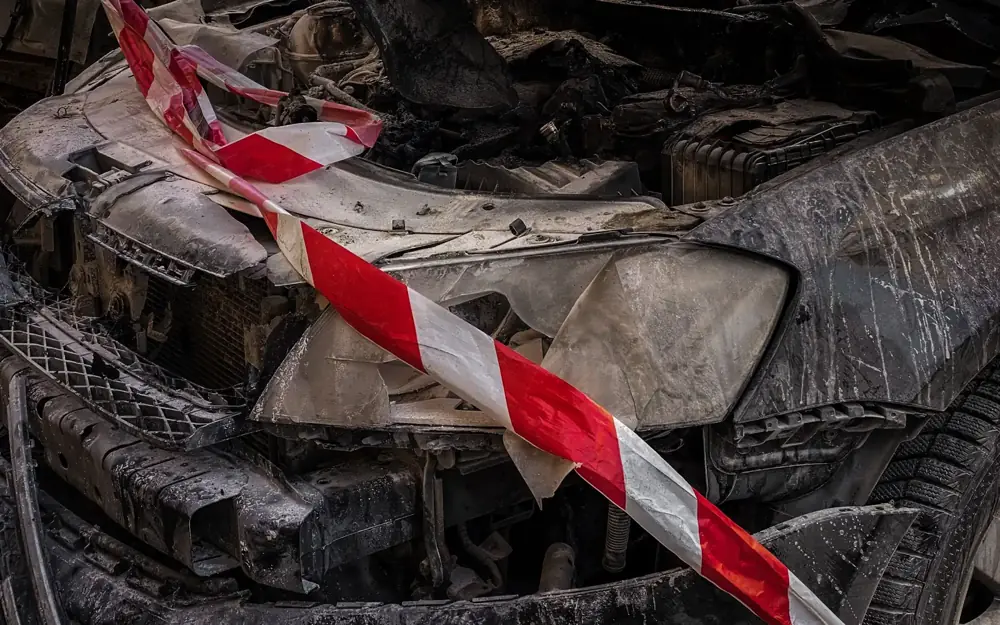
Vehicle damage is one of the most obvious things to photograph after an accident.
When it is safe, try to photograph more than just the damage to your own vehicle.
Pictures of each vehicle can provide a broader view of the collision.
Consider taking photographs of:
- Front-end damage
- Rear-end damage
- Damage to either side
- Broken windows
- Damaged lights
- Wheels and tires
- Detached vehicle parts
- License plates
Try taking both close-up and wider photographs.
Close-up pictures can show specific damage. Wider pictures can show where that damage is located on the vehicle.
This can help investigators compare the damage between vehicles.
However, damage patterns alone do not always establish exactly how an accident happened.
Photograph the Entire Accident Scene
Do not focus only on the vehicles.
The surrounding area may contain important information about the collision.
If it is safe, wider photographs may show the position of vehicles in relation to:
- Traffic lanes
- Intersections
- Driveways
- Stop signs
- Traffic lights
- Medians
- Curves
- Shoulders
- Nearby businesses
- Construction areas
These wider views can provide context that close-up damage photos cannot.
For example, a close photograph might clearly show damage to a car's passenger side. A wider photograph might show that the collision occurred near an intersection with multiple turning lanes and traffic signals.
Both types of pictures provide different information.
Take Pictures of Road Conditions
The condition of the roadway may be relevant to an accident investigation.
Depending on the circumstances, photographs could document:
- Wet pavement
- Standing water
- Potholes
- Road debris
- Construction
- Uneven pavement
- Obstructed lane markings
- Other visible roadway conditions
Weather can change quickly.
If it was raining at the time of an accident but the weather clears later, photographs taken shortly afterward may help preserve what conditions looked like near the time of the collision.
The same is true for temporary construction or debris that may later be removed.
Photograph Traffic Signs and Signals
Traffic controls can be important when an accident happens at an intersection or other controlled area.
Photographs may document stop signs, yield signs, speed-limit signs, traffic lights, turn lanes, and pavement markings.
Try to take pictures that show where those controls are located in relation to the accident scene.
A photograph of a stop sign by itself may provide limited context. A wider picture showing the stop sign, intersection, and nearby lanes can provide more useful information.
Again, do not enter traffic or place yourself in danger to take these photographs.
Photograph Debris and Visible Marks
A collision can leave temporary physical evidence on or near the roadway.
Depending on the crash, that could include:
- Broken vehicle parts
- Glass
- Debris
- Fluid on the roadway
- Tire marks
- Scrape marks
- Damaged roadside objects
Emergency crews may need to clear this material to reopen the road.
Photographs can preserve what was visible before that happens.
However, someone viewing a photograph later should be careful about assuming exactly what a mark or piece of debris means without additional investigation.
Its significance may depend on where it came from and how it relates to the collision.
Why Should You Take Both Close-Up and Wide Photos?
Close-up and wide photographs serve different purposes.
A close-up photo can capture detail. A wider photograph provides context.
For example, you could take one close picture showing damage to a vehicle's rear bumper and another from farther away showing the entire rear of the vehicle.
The same idea applies to the accident scene.
A close photograph might show debris on the pavement. A wider photograph can show where that debris was located in relation to the vehicles and roadway.
Taking pictures from several safe angles can create a more complete visual record.
Should You Take Video Too?
Video can also be useful when it can be recorded safely.
A slow video of the accident scene may capture details that were missed in individual photographs.
For example, video may show the overall roadway layout, vehicle positions, surrounding businesses, traffic controls, or environmental conditions.
There is no need to narrate conclusions about who caused the accident.
Simply recording what the scene looks like can preserve useful information.
What If an 18-Wheeler Is Involved?
Pictures can be especially useful when a commercial truck is involved because the vehicle may contain identifying information that becomes important later.
When it is safe, photographs may capture:
- Tractor damage
- Trailer damage
- Trucking company markings
- Tractor number
- Trailer number
- License plates
- Visible identifying numbers
- Cargo or trailer conditions that are visible from a safe location
These photographs may help identify the truck and businesses associated with it.
However, the presence of a company name on a truck does not automatically establish that company's legal responsibility for the collision.
That question may require additional investigation.
What Should You Do With the Pictures Afterward?
Keep the original photos and videos when possible.
Avoid deleting images simply because they seem unimportant at first.
A photograph that appears ordinary may contain something useful in the background, such as a traffic sign, nearby business, vehicle position, or road marking.
Keeping the original files can also preserve information associated with the photographs, such as the date and time recorded by the device.
It can be helpful to keep accident-related photographs together with other documents involving the collision.
What If You Could Not Take Pictures?
Not everyone can photograph an accident scene.
You may have been injured, transported from the scene, unable to safely leave your vehicle, or simply too overwhelmed to think about taking pictures.
That does not mean the accident cannot be investigated.
Other possible sources of information may include police photographs, witness photos or videos, nearby surveillance cameras, dashcams, vehicle damage, crash reports, and other evidence.
The absence of personal photographs is not necessarily the end of an investigation.
Why Does It Matter After an Accident?
Accident scenes do not stay the same.
Vehicles are moved and repaired. Debris disappears. Traffic resumes. Temporary road conditions change.
Photographs can preserve a visual record of details that investigators might otherwise never see.
At Jacqueline A. Scott & Associates, when we investigate a Louisiana car or truck accident, we can review available photographs and videos alongside crash reports, witness information, vehicle damage, electronic records, and other evidence.
A photograph may help us identify something that needs additional investigation, such as a nearby business that could have surveillance video, a traffic-control device, a particular area of vehicle damage, or another detail from the scene.
We do not assume that one photograph tells the entire story. Instead, we can compare the images with the other available evidence to help determine what happened.
Frequently Asked Questions About Taking Pictures After an Accident
What pictures should I take after a car accident?
If it is safe, photograph the vehicles, damage, license plates, overall accident scene, traffic signs or signals, lane markings, road conditions, debris, and other relevant details.
Should I take pictures even after a minor accident?
Photos may still be useful because vehicle damage or other details could change after everyone leaves. The importance of particular photographs depends on the circumstances of the collision.
Should I take close-up or wide pictures?
Both can be helpful. Close-up photographs preserve specific details, while wider photographs show where those details are located in relation to the vehicle or accident scene.
Should I take pictures if doing so requires walking into traffic?
No. Personal safety should come first. Do not enter active traffic or another dangerous area simply to take a photograph.
What if I did not take any pictures at the accident scene?
The accident may still be investigated using other available evidence. At Jacqueline A. Scott & Associates, we can look for crash reports, witness information, surveillance footage, vehicle evidence, dashcam recordings, and other sources that may help explain what happened.
This article is general information about Louisiana law and is not legal advice. Laws and deadlines can change, and every case depends on its own facts. Past results do not guarantee or predict future outcomes. Reading this page or contacting the firm does not by itself create an attorney-client relationship.